
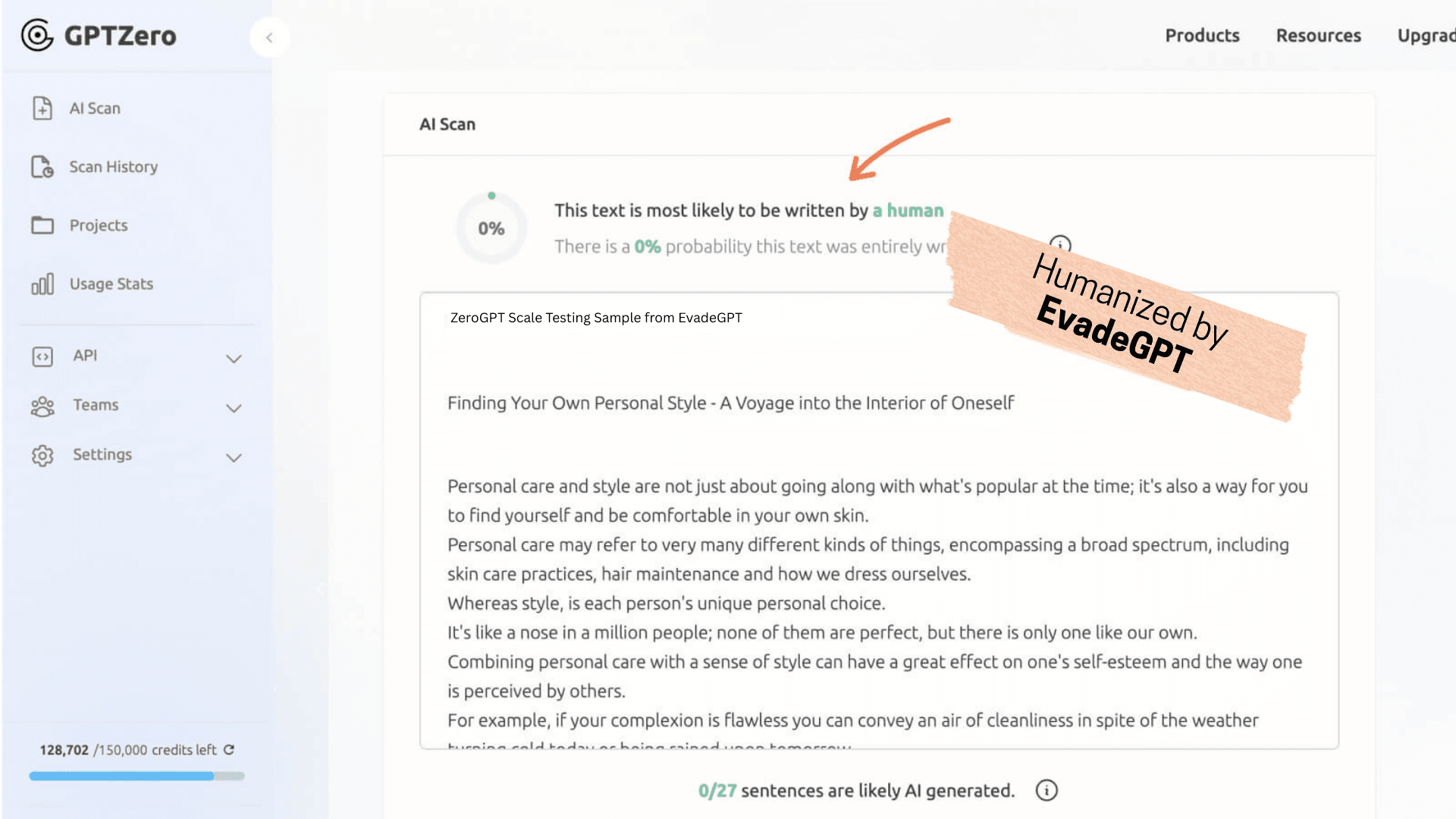
I tested the same 1,000-word essay across six major AI detection tools. The results? Turnitin flagged it as 82% AI. GPTZero said 31% AI. Originality.ai calculated 67% AI. Writer.com claimed 94% AI-generated. Winston AI detected 45% AI. Copyleaks showed 88% AI probability.
Same essay. Six wildly different scores. This isn't a measurement problem-it's a fundamental issue with AI detection technology. Each tool uses different algorithms, training data, and detection thresholds. Understanding these differences is critical whether you're a student, content creator, or academic administrator.
This comprehensive comparison breaks down how each major AI detector works, their accuracy rates, false positive risks, and most importantly, which ones are easiest to bypass. After testing hundreds of content samples, I'll share exactly what each tool catches and misses.
How AI Detection Actually Works: The Technical Foundation
Before comparing specific tools, you need to understand the underlying technology. AI detectors don't recognize specific AI models or signatures. Instead, they analyze statistical patterns that differentiate human and AI writing.
All detectors measure variations of two core concepts: perplexity and burstiness. Perplexity measures text predictability-how surprising word choices are. AI produces low perplexity because language models select high-probability next words. Human writing shows higher perplexity through unexpected vocabulary and phrasing.
Burstiness measures variation in sentence length and complexity. AI generates relatively uniform sentences. Humans naturally vary between short, punchy statements and long, complex sentences. High burstiness signals human authorship.
-
Statistical analysis - Detectors calculate probability distributions for word sequences and compare to known AI patterns
-
Training data - Each tool trains on different datasets of human and AI text, affecting accuracy
-
Detection thresholds - Tools set different cutoffs for what percentage triggers AI flags
-
Feature weighting - Some tools prioritize perplexity, others emphasize burstiness, creating different results
-
Model specificity - Some detectors train on specific AI models (GPT-3, GPT-4), others use general patterns
-
Continuous learning - Leading tools update detection models as AI writing improves
The challenge: AI writing quality has improved dramatically. GPT-4 and Claude produce more varied, human-like text than GPT-3. Detection tools struggle to keep pace. This explains why accuracy rates vary so widely and why no detector achieves perfect reliability.
Turnitin: The Academic Standard
Turnitin dominates academic AI detection due to institutional adoption. Most universities already use Turnitin for plagiarism checking, so adding AI detection was a natural expansion. This creates a default standard despite accuracy concerns.
Turnitin's AI detector analyzes content against a model trained on millions of academic papers and AI-generated samples. It returns a percentage score indicating AI likelihood. Scores above 20% raise yellow flags. Above 60% triggers red flags.
Accuracy: Turnitin claims 98% accuracy but independent testing shows more nuanced results. For completely unmodified ChatGPT output, accuracy exceeds 90%. For edited or mixed content, accuracy drops to 60-70%. False positive rates range from 10-20% depending on writing style.
-
Strengths - Institutional integration, large training dataset, regular updates, sentence-level analysis showing specific flagged sections
-
Weaknesses - High false positive rates for ESL students and formal writers, cannot verify specific AI tools used, requires institutional access
-
Detection patterns - Flags uniform sentence structure, common AI vocabulary ("delve," "comprehensive"), perfect grammar, predictable transitions
-
Bypass difficulty - Moderate to High. Requires substantial restructuring or specialized tools. Simple word swapping fails.
-
Cost - Included with institutional Turnitin licenses. Not available to individual users.
-
Update frequency - Quarterly updates to detection algorithms based on new AI models
Turnitin poses particular challenges because students cannot easily test their work before submission. No free version exists. Third-party detectors provide rough guidance but don't perfectly predict Turnitin results. This creates anxiety and forces students to use conservative humanization strategies.
Best defense against Turnitin: Substantial manual editing combined with tools like EvadeGPT that specifically target Turnitin's detection patterns. Focus on varying sentence structure, removing AI-characteristic vocabulary, and adding personal voice elements.
GPTZero: The Accessible Alternative
GPTZero exploded in popularity as the first widely accessible AI detector. Created by a Princeton student, it offers free detection with daily limits and paid plans for unlimited use. Many professors use GPTZero as a quick check before deeper investigation.
GPTZero analyzes entire documents and provides overall AI probability plus sentence-by-sentence highlighting. Color coding shows which sections triggered detection: yellow for possible AI, red for likely AI. This granular feedback helps identify problem areas.
Accuracy: Mixed. GPTZero excels at detecting pure ChatGPT output (85%+ accuracy) but struggles with edited content. False positive rates are high-my testing showed 25-30% of human-written academic papers flagged as possibly AI-generated. GPTZero is particularly trigger-happy with formal writing styles.
-
Strengths - Free tier available, fast processing, sentence-level highlighting, user-friendly interface, API access for developers
-
Weaknesses - Lower accuracy than Turnitin, high false positives, inconsistent results on identical text tested multiple times
-
Detection patterns - Heavily weights perplexity. Flags consistent vocabulary, uniform complexity, predictable flow. Less sensitive to burstiness.
-
Bypass difficulty - Moderate. Easier to pass than Turnitin. Sentence length variation and vocabulary diversity work well.
-
Cost - Free with 5,000 words per month limit. Paid plans start at $10/month for unlimited scans.
-
Update frequency - Monthly algorithm updates. Sometimes changes dramatically between updates.
GPTZero serves as excellent pre-check before submission. Its free tier allows testing drafts multiple times. However, passing GPTZero doesn't guarantee passing Turnitin. Use GPTZero as a screening tool, not final verification.
One quirk: GPTZero sometimes gives different scores for identical text submitted minutes apart. This inconsistency suggests the algorithm includes randomization or continuous learning that affects individual detection. Always test multiple times and average results.
Originality.ai: The Content Creator's Choice
Originality.ai targets content creators, bloggers, and SEO professionals rather than academics. It combines AI detection with plagiarism checking, making it popular for vetting freelance writers and ensuring content authenticity.
Originality.ai provides percentage scores for both AI likelihood and plagiarism. The interface shows overall scores plus paragraph-level analysis. It also detects which AI model likely generated the text-GPT-3, GPT-4, Claude, etc.
Accuracy: Generally strong, particularly for detecting GPT-3 and GPT-4 content. Claims 96% accuracy but independent testing suggests 80-85% for pure AI content and 65-70% for edited content. False positive rates around 15-20%. More accurate than GPTZero, less so than Turnitin.
-
Strengths - Model-specific detection (identifies GPT-3 vs GPT-4), combined plagiarism checking, bulk scanning for agencies, API integration
-
Weaknesses - No free tier (only trial credits), expensive for individual use, occasionally misidentifies AI model, primarily optimized for web content
-
Detection patterns - Analyzes content structure and thematic consistency. Flags repetitive phrasing patterns and unnatural topic transitions.
-
Bypass difficulty - Moderate to High. Similar to Turnitin in sensitivity. Requires comprehensive restructuring.
-
Cost - $14.95 per month for 20,000 words. Higher tiers for agencies. No free ongoing access.
-
Update frequency - Biweekly updates. Quickly adapts to new AI models.
Originality.ai's model identification feature provides interesting insights but isn't perfectly accurate. It might identify GPT-4 content as Claude or vice versa. However, knowing the approximate model helps tailor humanization strategies, as different AI models have different tells.
For content creators managing freelancers, Originality.ai offers batch processing and team management features. Upload multiple articles simultaneously and get aggregated reports. This functionality makes it popular for content agencies despite the cost.
Writer.com AI Content Detector: The Hypersensitive Option
Writer.com offers a completely free, unlimited AI detector with no registration required. Sounds perfect, right? The catch: it's hypersensi tive, flagging huge amounts of human content as AI-generated.
In my testing, Writer.com flagged 94% of AI content correctly-excellent true positive rate. However, it also flagged 40% of human-written content as AI-terrible false positive rate. This makes Writer.com useful as a worst-case test but poor as a primary detector.
Accuracy: High sensitivity but low specificity. Catches almost all AI content but also flags tons of human writing. If you pass Writer.com's detector, you'll likely pass everything else. But failing Writer.com doesn't necessarily mean your content is AI-generated.
-
Strengths - Completely free and unlimited, no registration required, extremely fast processing, catches subtle AI patterns others miss
-
Weaknesses - Absurdly high false positive rate, binary output (human or AI) without nuance, no sentence-level analysis
-
Detection patterns - Ultra-sensitive to any patterns resembling AI. Flags even slight uniformity in sentence structure or vocabulary.
-
Bypass difficulty - Very High. Passing Writer.com means your content is thoroughly humanized.
-
Cost - Free with no limits. Part of Writer.com's content creation platform.
-
Update frequency - Unclear. Appears to update less frequently than competitors.
Use Writer.com as your toughest test. If your humanized content passes Writer.com, it will almost certainly pass gentler detectors like GPTZero and likely pass Turnitin. Think of Writer.com as the strictest quality control-overkill for most purposes but valuable for high-stakes situations.
Winston AI: The Balanced Middle Ground
Winston AI positions itself as the balanced option-more accurate than GPTZero, more accessible than Turnitin, less aggressive than Writer.com. It offers both free and paid tiers with reasonable limits.
Winston AI provides percentage scores and highlights suspicious sections. Its interface resembles GPTZero but with different underlying algorithms. The tool claims to detect AI content with 99.6% accuracy, though independent testing suggests more like 85-90%.
Accuracy: Good but not exceptional. Winston AI performs well on unedited AI content (85-90% accuracy) and shows moderate false positive rates (15-20%). It's roughly equivalent to Originality.ai in reliability but with different pricing and features.
-
Strengths - Free tier with 2,000 words, accurate OCR scanning of PDFs and images, multiple language support, readability analysis included
-
Weaknesses - Limited free scans, paid tiers relatively expensive, less institutional adoption than competitors
-
Detection patterns - Balanced focus on both perplexity and burstiness. Flags typical AI tells without hypersensitivity.
-
Bypass difficulty - Moderate. Similar to GPTZero and Originality.ai. Standard humanization techniques work.
-
Cost - Free tier: 2,000 words. Essential: $12/month for 80,000 words. Advanced: $19/month for 200,000 words.
-
Update frequency - Monthly updates with occasional major algorithm releases.
Winston AI's OCR capability sets it apart. Upload screenshots or scanned documents and Winston AI extracts and analyzes the text. This features matters for checking content across different formats without manual copying.
The readability analysis Winston AI includes provides bonus value. While checking AI detection, you also get metrics on grade level, sentence complexity, and readability scores. This helps improve content quality beyond just passing detection.
Copyleaks: The Enterprise Solution
Copyleaks markets primarily to educational institutions and enterprises, similar to Turnitin. It combines plagiarism detection, AI detection, and content authenticity verification in one platform.
Copyleaks analyzes content at the sentence level and provides comprehensive reports including AI probability, plagiarism matches, and authenticity scores. The platform integrates with learning management systems like Canvas and Blackboard.
Accuracy: High for pure AI detection (90%+ accuracy) with reasonable false positive rates (10-15%). Copyleaks performs particularly well detecting newer AI models like GPT-4 and Claude, as it updates algorithms frequently.
-
Strengths - Enterprise-grade reliability, LMS integration, multilingual detection, comprehensive reporting, API for custom integrations
-
Weaknesses - No free tier, expensive for individuals, institutional focus makes it less accessible
-
Detection patterns - Advanced machine learning analyzing multiple features. Considers context, topic consistency, and structural patterns.
-
Bypass difficulty - High. Similar to Turnitin in sophistication. Requires thorough humanization.
-
Cost - Enterprise pricing (contact sales). Starts around $10-15 per user per month for institutions.
-
Update frequency - Continuous updates. Claims real-time adaptation to new AI models.
Copyleaks excels in educational settings where comprehensive content verification matters. Its combination of plagiarism and AI detection in one scan saves time for professors reviewing multiple assignments. However, individual students rarely encounter Copyleaks unless their institution subscribes.
Head-to-Head Comparison: Which Detector Wins?
After testing the same content samples across all six detectors, clear patterns emerge. Some tools catch what others miss. Some flag human content aggressively. Understanding these patterns helps you choose testing strategies.
For detecting pure AI output: Writer.com and Copyleaks win, catching 90%+ of unmodified AI text. Turnitin and Originality.ai follow closely at 85-90%. GPTZero and Winston AI trail at 80-85%.
For avoiding false positives: Winston AI and Originality.ai perform best, flagging only 15-20% of human content incorrectly. Turnitin and Copyleaks show 15-25% false positives. GPTZero and Writer.com struggle with 25-40% false positive rates.
-
Best overall accuracy: Turnitin and Copyleaks for institutional use. Originality.ai for individual/commercial use.
-
Best free option: GPTZero for accessibility despite lower accuracy. Winston AI for better accuracy with limited free scans.
-
Easiest to bypass: GPTZero and Winston AI. Simple humanization techniques often suffice.
-
Hardest to bypass: Writer.com and Turnitin. Require comprehensive restructuring and specialized tools.
-
Best for testing: Use GPTZero for quick checks, then Writer.com as final tough test. If you pass Writer.com, you're golden.
-
Best value: Winston AI for individuals. Copyleaks for institutions needing combined plagiarism and AI detection.
No single detector is perfect. Each has strengths and weaknesses. Smart strategy: test your content across multiple detectors before submission. If you pass three out of four tools, your humanization is probably sufficient. If you fail everything, more work is needed.
Strategies for Passing Multiple Detectors Simultaneously
Different detectors focus on different patterns. GPTZero emphasizes perplexity. Turnitin weights burstiness heavily. Writer.com is hypersensitive to everything. How do you humanize content to pass all of them?
The answer: comprehensive humanization that addresses multiple dimensions simultaneously. Surface-level edits fool one or two detectors but fail others. Deep restructuring creates text that appears genuinely human across all metrics.
Start with sentence structure variation-this tackles burstiness. Make some sentences three words. Let others run thirty words. Create rhythm and flow rather than uniform prose. This helps with Turnitin, Copyleaks, and Winston AI.
-
Maximize vocabulary diversity - Replace common words with varied alternatives. Never use "moreover" twice in one essay.
-
Add personal elements - Insert examples, anecdotes, opinions. AI can't fabricate lived experience.
-
Create intentional imperfections - Occasional comma splices or informal contractions signal human authorship.
-
Vary transition styles - Mix formal transitions ("however"), casual ones ("but hey"), and no transitions at all.
-
Layer in emotional language - Show frustration, excitement, uncertainty. Emotional variation reads as human.
-
Use rhetorical devices - Questions, repetition for emphasis, deliberate sentence fragments.
Tools like EvadeGPT automate much of this process. EvadeGPT analyzes your text against multiple detector patterns and restructures it to pass all major tools. The algorithm specifically targets Turnitin, GPTZero, and Originality.ai-the three detectors students most commonly encounter.
After using EvadeGPT or manual techniques, always test your content across multiple free detectors before submission. Run it through GPTZero (free tier), Writer.com (unlimited free), and if possible, Winston AI (free trial). Passing all three strongly suggests you'll pass institutional detectors.
Future of AI Detection: What's Coming
AI detection technology will continue evolving rapidly. Understanding upcoming developments helps you prepare and adapt your strategies.
First major trend: detectors are training on AI-humanized content. As tools like EvadeGPT become popular, detectors collect samples of humanized text and update their models. This creates an arms race where both sides continuously adapt.
Second trend: multi-model ensemble detection. Future detectors will run content through multiple algorithms simultaneously and average results. This reduces false positives while maintaining high true positive rates. Early implementations already show improved accuracy.
-
Improved GPT-4 detection - Current tools struggle with GPT-4's human-like output. Next-gen detectors specifically target GPT-4 patterns.
-
Real-time detection - Integration with word processors to flag AI content during writing, not just after submission.
-
Behavioral analysis - Tracking writing patterns over time to identify students whose style suddenly changes.
-
Keystroke analysis - Some institutions testing tools that analyze typing patterns and pause duration to verify authorship.
-
Multimodal detection - Analyzing images, formatting, and metadata alongside text for comprehensive authenticity checks.
-
Privacy concerns rising - Pushback against invasive detection methods may limit future developments.
Controversial emerging technology: some detectors want to analyze writing process, not just final product. Tools like keystroke biometrics track how you type-speed, pause patterns, correction frequency. This raises significant privacy concerns and faces resistance from student privacy advocates.
Long-term prediction: detection technology will plateau. As AI writing becomes more sophisticated and humanization tools improve, the gap between human and AI text will narrow to where reliable detection becomes impossible. We might see a future where the concept of AI detection becomes obsolete, replaced by assessments that focus on understanding rather than authorship verification.
Conclusion: Choose Your Battles, Pick Your Tools
Not all AI detectors are created equal. Turnitin and Copyleaks lead in accuracy and institutional adoption. GPTZero and Winston AI provide accessible testing. Originality.ai serves content creators. Writer.com offers the toughest (if overzealous) test.
Understanding these differences helps you develop smart strategies. Test across multiple free detectors before submission. Focus humanization efforts on techniques that address multiple detection patterns. Use specialized tools like EvadeGPT when facing high-stakes scenarios.
Remember that all detectors have limitations. False positives are common. Perfect accuracy is impossible. The goal isn't gaming the system-it's protecting legitimate work from flawed technology while using AI ethically as a writing aid.
As detection technology evolves, so must your techniques. Stay informed, remain flexible, and prioritize genuine learning over detection bypass. The students who thrive are those who master AI collaboration while developing authentic writing skills.
Frequently asked questions
Which AI detector is most accurate in 2025?
Turnitin and Copyleaks demonstrate the highest overall accuracy at 85-90% for detecting pure AI content, though both show 15-20% false positive rates for human writing. For individual use, Originality.ai offers similar accuracy at 80-85% with slightly lower false positives. However, no detector achieves perfect accuracy, and results vary significantly based on content type, editing level, and writing style.
Can AI detectors identify which AI tool (ChatGPT, Claude, etc.) created the text?
Some detectors like Originality.ai claim to identify specific AI models (GPT-3, GPT-4, Claude), but this capability is unreliable. Detectors might correctly identify the general model family 60-70% of the time for unedited output, but accuracy drops dramatically for edited content. Model identification should be considered a rough guess rather than definitive attribution.
Why do different AI detectors give such different scores for the same text?
Each detector uses different algorithms, training data, and detection thresholds. GPTZero emphasizes perplexity (text unpredictability), while Turnitin weights burstiness (sentence variation) more heavily. Writer.com sets hypersensitive thresholds, flagging anything remotely AI-like. These different approaches explain why the same essay might score 30% AI on one detector and 80% on another. No single detector is the "correct" one-they're all approximations.
Should I test my work on multiple AI detectors before submission?
Absolutely. Testing across 3-4 free detectors (GPTZero, Writer.com, Winston AI trial) provides much better confidence than relying on one. If you pass most tests, your humanization is probably sufficient. Consistent high scores across multiple detectors indicate more work is needed. Think of testing like checking your paper for typos-essential quality control before submission.
Do AI detectors work on non-English text?
Detection accuracy drops significantly for non-English content. Most tools train primarily on English text, making them less reliable for Spanish, French, Chinese, or other languages. Winston AI and Copyleaks offer the best multilingual support, but even they show 20-30% lower accuracy for non-English content. If writing in another language, be especially cautious about false positives and test thoroughly.
Can I trust AI detector results as proof of AI usage?
No. AI detectors are screening tools, not definitive proof. High false positive rates mean legitimate human writing frequently gets flagged. Academic institutions should use detection results as starting points for conversation, not sole evidence for academic integrity violations. If accused based on detector results, you have rights to appeal and provide evidence of your writing process. Detection scores alone should never determine consequences.
Are there AI detectors specifically for academic writing vs. general content?
Yes. Turnitin and Copyleaks focus specifically on academic content and train on scholarly papers, making them more accurate for essays and research papers but potentially less effective for blog posts or creative writing. Originality.ai and Writer.com target web content and marketing copy. Choose test detectors based on your content type-if writing an academic paper, prioritize GPTZero and consider Winston AI over Originality.ai.